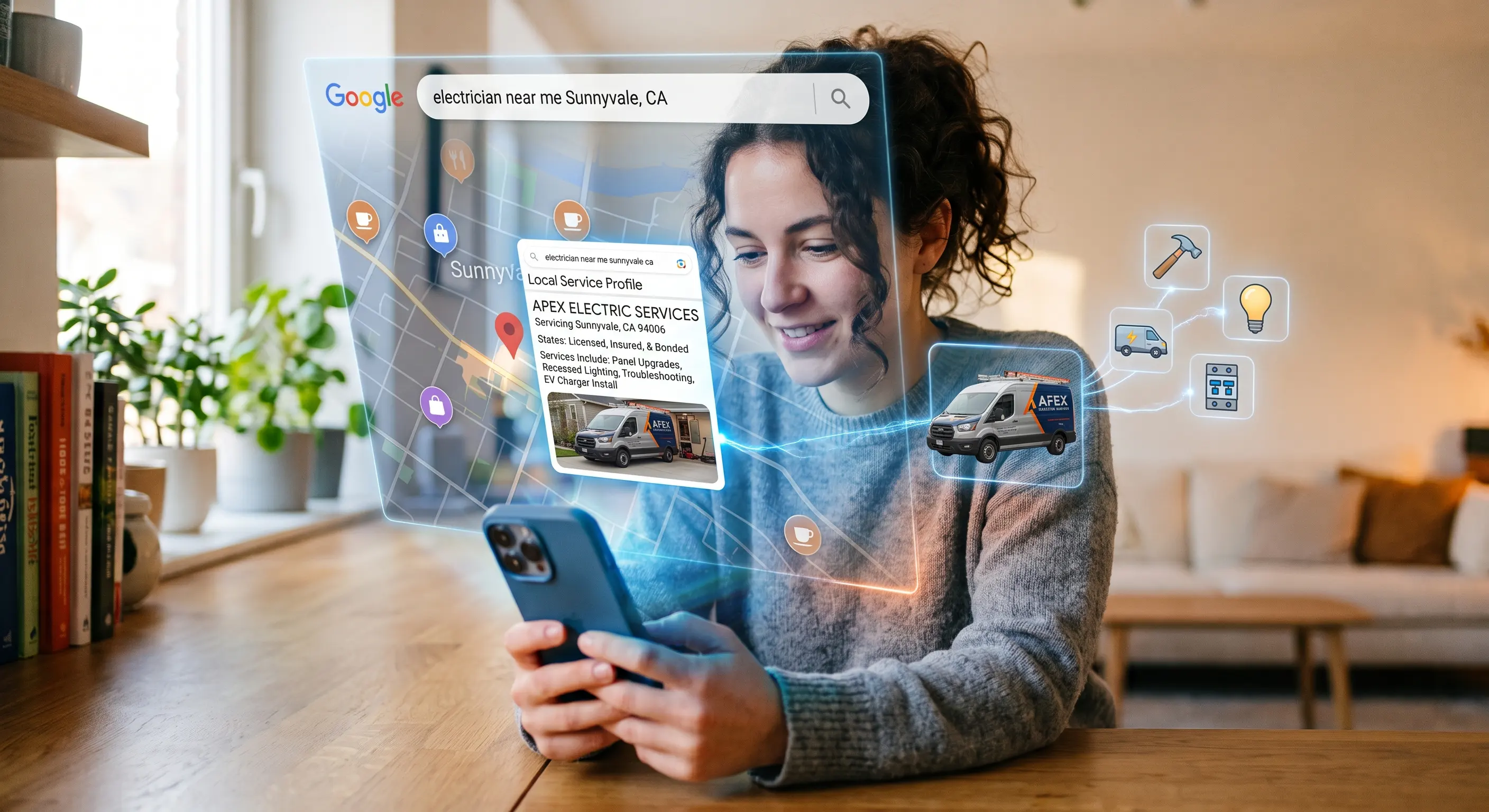
Here is a startling statistic that summarizes digital search for 2026:roughly 68% of Google searches now end without a single click (SearchEngine).
For those who thought this popped out of nowhere, you're wrong. Ten years ago, roughly 45% of searches were zero-click results (SimilarWeb). This has been gradually increasing ever since and poised to grow as Google shifts its priorities from being a search engine to more of an answer engine.
So what does this mean for small businesses? It means running the same SEO and SERP playbook that consultants and marketers advised 10 years ago won't work today.
In order for your small business to capture digital interest for the next 10 years, you'll need to change how you do a few things such as creating authoritative content, ensuring clear differentiation, and having an “answer optimized” website.
Defining the terminology: What Zero-Click Search Really Means
It is often confused where zero-click search starts and ends, so we’ll keep it simple. Zero-click search is when:
- A user asks a question and is then provided a summarized answer with citations,
thereby eliminating the responsibility for the user to conduct their own research and come to an independent conclusion.
Astonishing Early Stats behind the Zero-Click Wave
As you might assume, having AI cite sources and provide an answer without user input is an attractive and convenient sell as it provides immense value in both saving time and effort for the user.
What's even more astonishing behind this new wave is the stats supporting the adoption. A study by Omniboard found that AI referral traffic grew by 527% year-over-year between 2024 and 2025.
Who could benefit from this new free inbound channel
Any small business with a physical location, a service area, or a niche expertise stands to benefit, but the winners won’t be who you expect.
Businesses that stand to gain from zero-click search are those that stop treating their website like a static banner and start treating it like a source for answers. Tools like ChatGPT, Perplexity, Claude and Gemini cite sources using criteria like relevance, structured data and authoritative content to answer questions so it's important to present yourself as one.
For the past 10 years, SEO meant ranking #1 on Google and capturing that click, which still matters, but it has evolved from measuring general traffic to giving more weight to trusted impressions.
If I were to shortlist businesses would benefit from zero-click search, here is how I would define the winners and losers:
Winners
- Local service businesses (HVAC, plumbing, dental, legal, roofing) — high consideration categories where customers research before calling
- Niche specialty businesses with clear differentiation (vegan bakery, mobile notary, etc.)
- Businesses with high review rates — signals relevance to AI crawlers
Losers
- Generic providers that don't differentiate themselves
- Businesses with inconsistent NAP
- Companies with poor website crawlability
Will AI Search take over as Google SERP?
It's safe to say that AI search won't take over traditional Google SERP anytime soon… but it shouldn’t keep you from making the necessary changes today. Google SERP is still a dominant channel for generating inbound, however it's important to shift focus from keywords, backlinks and content freshness to content authority and answer optimization to set yourself up for the new wave.
Here are the major players in zero-click search to optimize around:
- ChatGPT
- Google AI Overviews
- Google AI Mode
- Perplexity
- Gemini
- Claude
- Meta AI
Essential to having your business cited by AI
Getting cited mid 2026 isn't luck, it's engineering.
Start with the foundations: make sure you have a search-indexable and crawlability-optimized website. If an AI bot can’t crawl and index your site, in their eyes, you don't exist. This means schema markups, FAQ’s and services clearly listed, clean URL structures, robots.txt files and a handful more tweaks.
The second area: ensure NAP consistency (Name, Address, Phone number). Make sure your business information is consistent and identical across every platform wherever your business appears—Google, Facebook, Apple Maps, Yelp, etc. AI platforms have historically cited businesses with consistent and trusted information.
The third area: upkeep social media efforts to maintain relevance. AI models do more than crawl websites, they ingest social media content, review patterns and gauge freshness. Posting weekly on GBP pages, maintaining active status on Facebook/Instagram, and publishing fresh content as often as you can all help.
All in all, zero-click search is still an uncharted domain. However, if you assume this shift is merely a fleeting trend, recall the early days of Google SERP. Businesses that establish AI citation authority today will command the recommendation layer for the next decade, so best get on it.